
AI-Native Software Engineering
Build and scale production SaaS as a solo developer or tiny team. Direct autonomous AI coding agents across the full software lifecycle — from executable specs and type-safe schema contracts to automated test gates, zero-idle cloud deployment, and real AI features.
The Two Pillars of the Course
A structured dual-track curriculum combining full-stack development mastery with real customer-facing AI feature engineering.
The AI-Native Development Process
Direct AI agents across planning, UI design, backend development, automated testing, and CI/CD promotion while keeping strict SDLC discipline intact.
- Spec-First Engineering: Clear PRDs & tech specs anchor AI context
- Bilateral Schema Contracts: Connect-RPC & Protobuf eliminate API guesswork
- Automated Quality Gates: Offline fakes, unit tests, and gated CI/CD
- Agentic IDE Steering: Strict rules (AGENTS.md) bound diffs to <150 lines
Building Real AI Product Features
Engineer high-value, intelligent user-facing features inside deterministic software harnesses with bounded execution costs and zero schema breakage.
- Deterministic Harnesses: Wrap dynamic agent loops in strict schemas
- 3D WebGL Avatar Engine: Browser-rendered 3D avatars with viseme lip-sync
- Hybrid RAG & Knowledge Graphs: BM25 + Vectorize + Cloudflare D1
- Token Cost Governance: Sliding context buffers & cost meters
Who Belongs in This Classroom
Developers who want massive AI development leverage without losing architectural control or drowning in opaque generated code.
Founders building full-lifecycle production SaaS on a zero-idle-cost cloud footprint without needing to hire a 5-person team upfront.
Small engineering units replacing slow cross-role handoff queues with autonomous builder workflows and automated CI/CD quality gates.
The One Lean Stack Throughout
We reject accidental complexity (heavy monolithic ORMs, nested virtual DOMs, multi-container sprawl) in favor of high-context-density, zero-impedance technologies that give AI agents maximum clarity:
Curriculum Modules
Each class is a focused, completable unit containing short video lessons, downloadable starter repos, specs, and verifiable verification challenges.
Start Here: Course Orientation & Roadmap
Introduction to the curriculum roadmap, the two course pillars (AI-native development process & AI-enabled product features), the deliberately lean demo stack, and essential study habits for solo developer leverage.
- Two Pillars: AI-native process & customer-facing AI features
- Solo Leverage: Operating as the entire org chart on a lean budget
- One Lean Stack: Lit + PWA, Go on Cloud Run, Firestore & Cloudflare
- How to Learn: Watch in order, build along, and ask with context
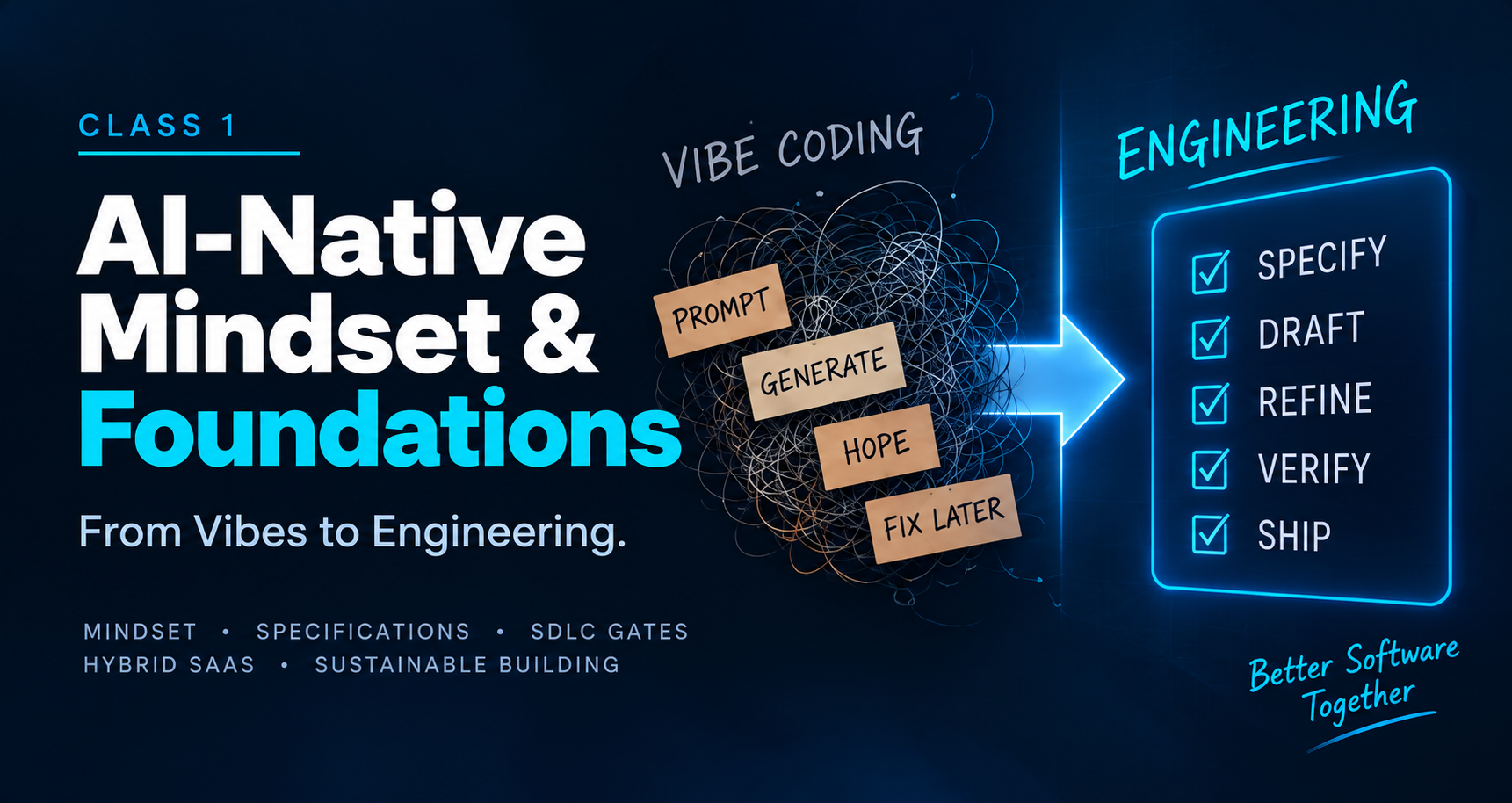
AI-Native Engineering Foundations
Replace unstructured vibe-coding habits with disciplined AI-native software engineering principles, the Draft–Refine lifecycle, verification gates, and the hybrid SaaS architecture.
- What "AI-Native" Means: Human as architect & verification authority
- The Draft–Refine Lifecycle & Two AI Budgets Rule
- Deterministic Bedrock vs. the Three AI Seams
- Taming Non-Determinism with Continuous Evals & Gates
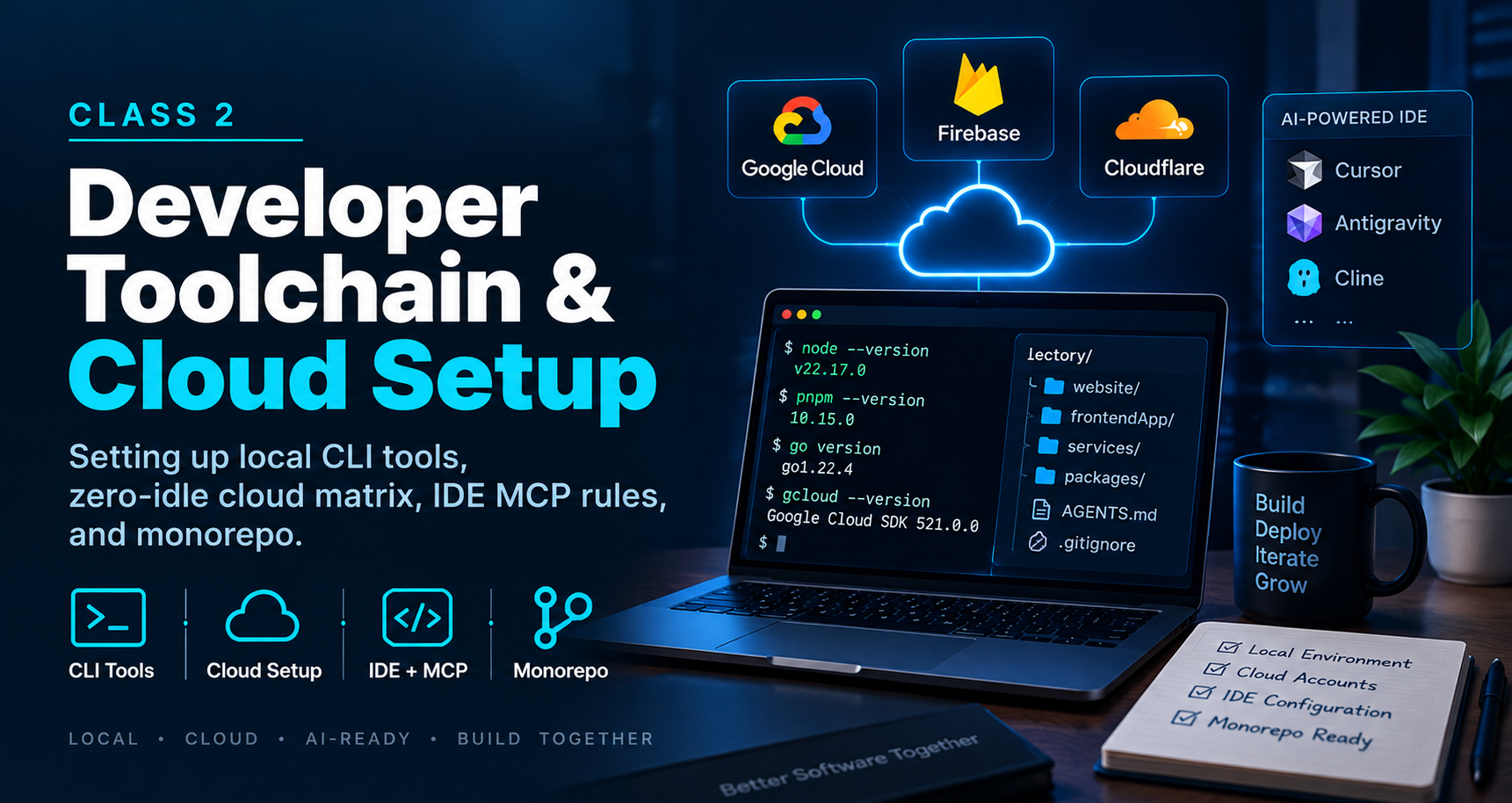
The AI-Native Dev Workspace
Set up a clean, zero-to-running local and cloud development workspace for AI-native full-stack engineering with zero idle cost.
- Toolchain Installation & Automated CLI Verification
- GCP Project with Budget Alarms & Cloudflare Setup
- Agentic IDE Context Steering Rules (AGENTS.md, GEMINI.md)
- Model Context Protocol (MCP) & Monorepo Scaffolding
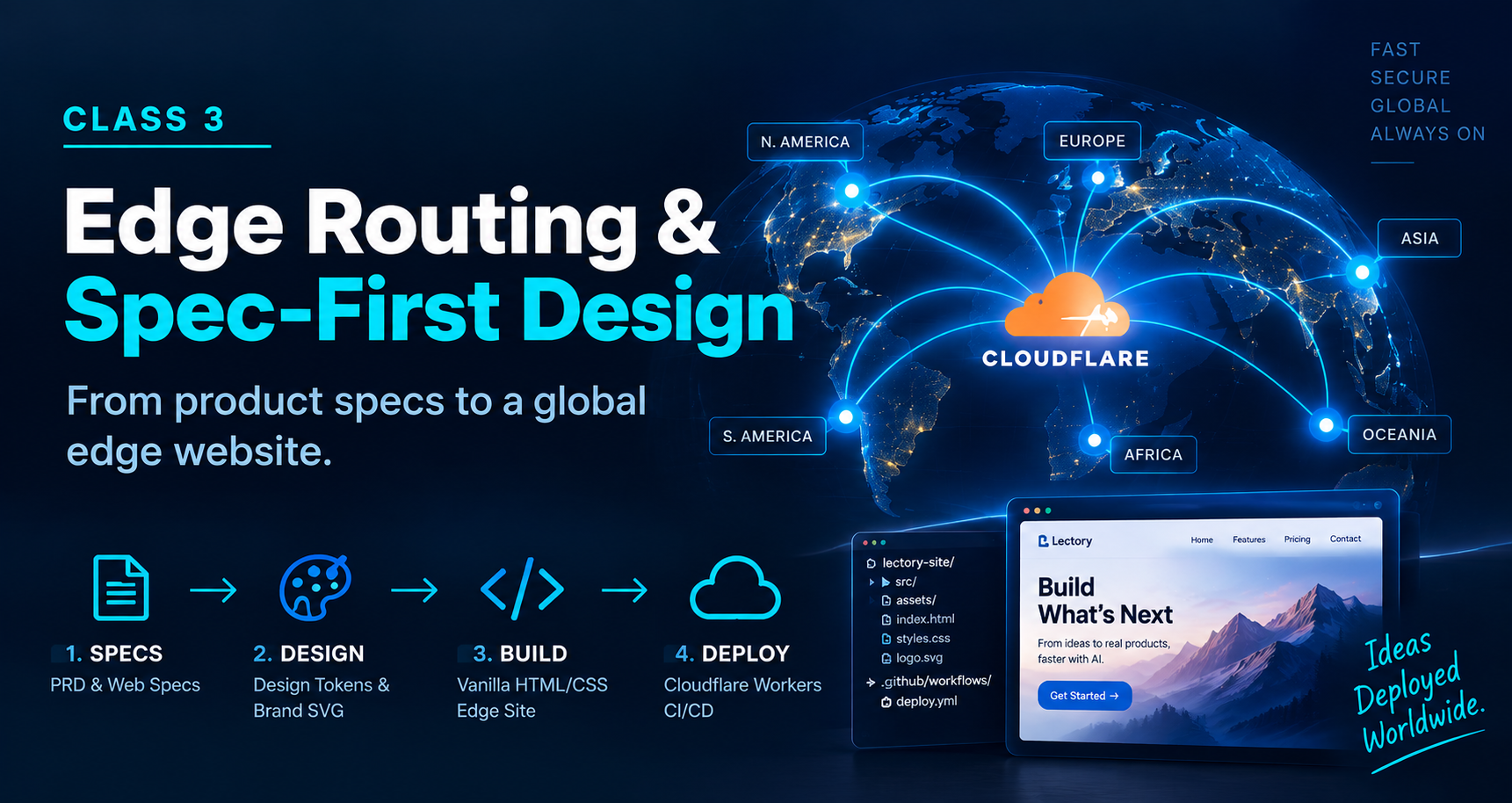
Marketing Website & Edge Deployment
Go from raw product concept to a live, polished, production-grade marketing website deployed globally on Cloudflare Workers with sub-100ms TTFB.
- Cloudflare Edge & Custom Domain DNS Delegation
- AI-Assisted Requirements Drafting (product & web PRDs)
- Design Tokens & AI Vector SVG Brand Generation
- Vanilla HTML/CSS, Accessibility & GitHub Actions CI/CD
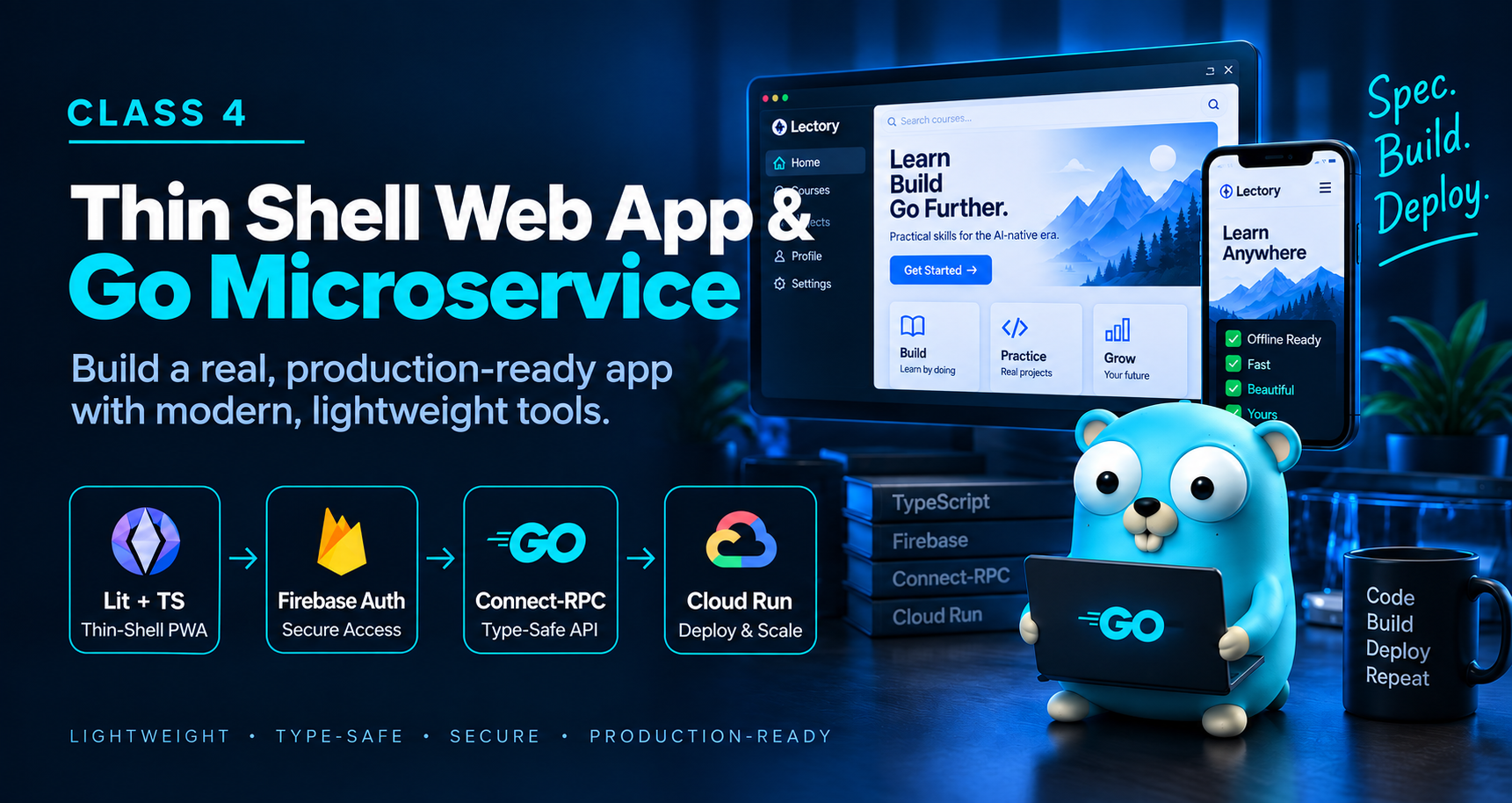
Full-Stack App Shell & Go Backend
Build, wire, and deploy the core authenticated SaaS application shell with Lit Web Components and a type-safe Go backend microservice on Google Cloud Run.
- Lit 3.0 Web Components, Shadow DOM & Native Routing
- PWA Deep-Dive: Service Workers & Cache-First Routing
- Firebase Auth Integration via IDE MCP with Protection
- Protobuf Schema user.proto, Connect-RPC & Cloud Run
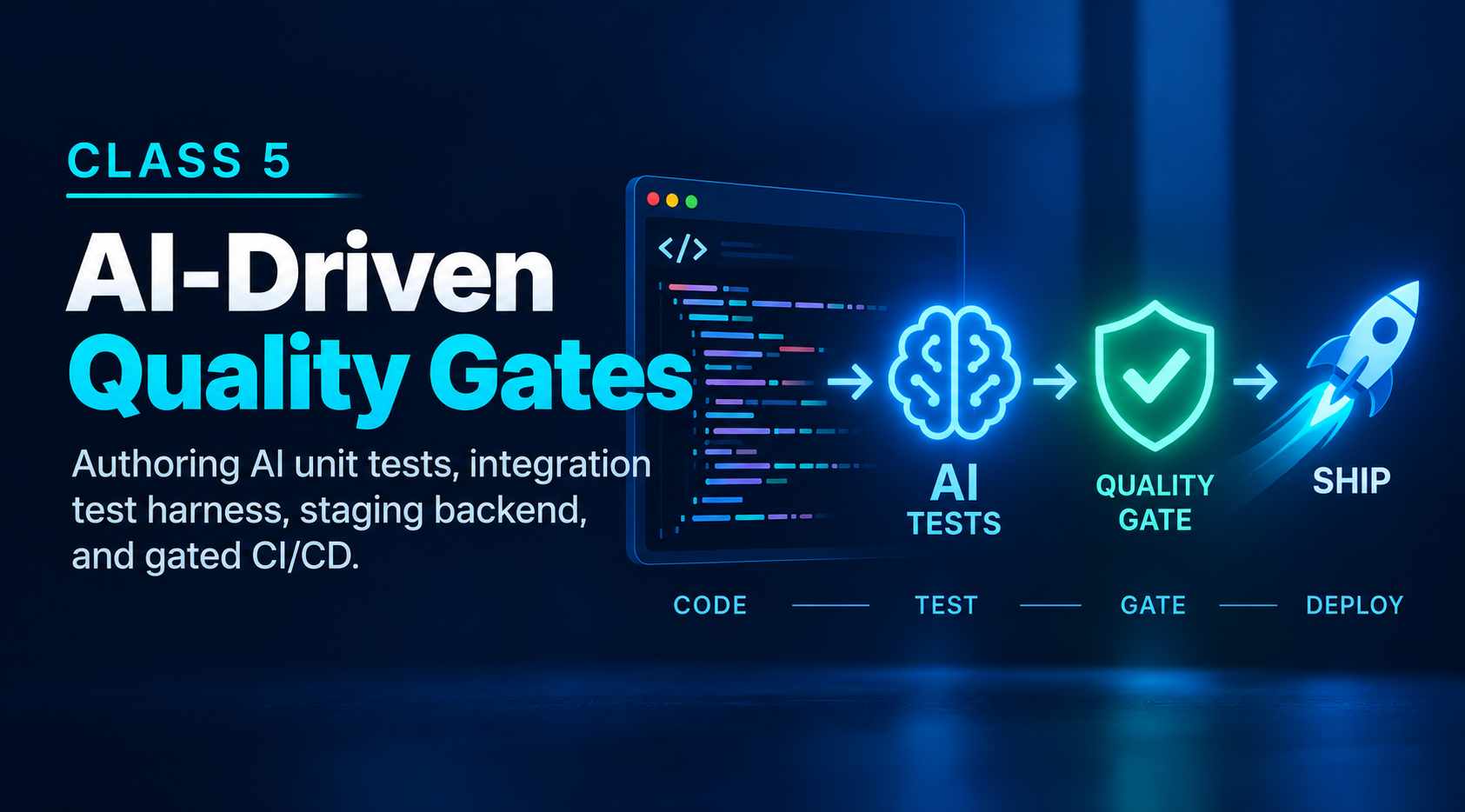
AI-Driven Quality Gates: Testing & CI/CD
Close the backend SDLC verification stage — AI-authored tests, an isolated staging environment, and a gated CI/CD pipeline (deploy-api.yml) that blocks bad deploys before production.
- Table-Driven Go Unit Tests & httptest with Offline Fakes
- AI-Assisted Test Expansion & Edge Case Stressing
- Two-Mode Build-Tagged Integration Test Harness
- Gated CI/CD Pipeline (deploy-api.yml) & Failure Triage
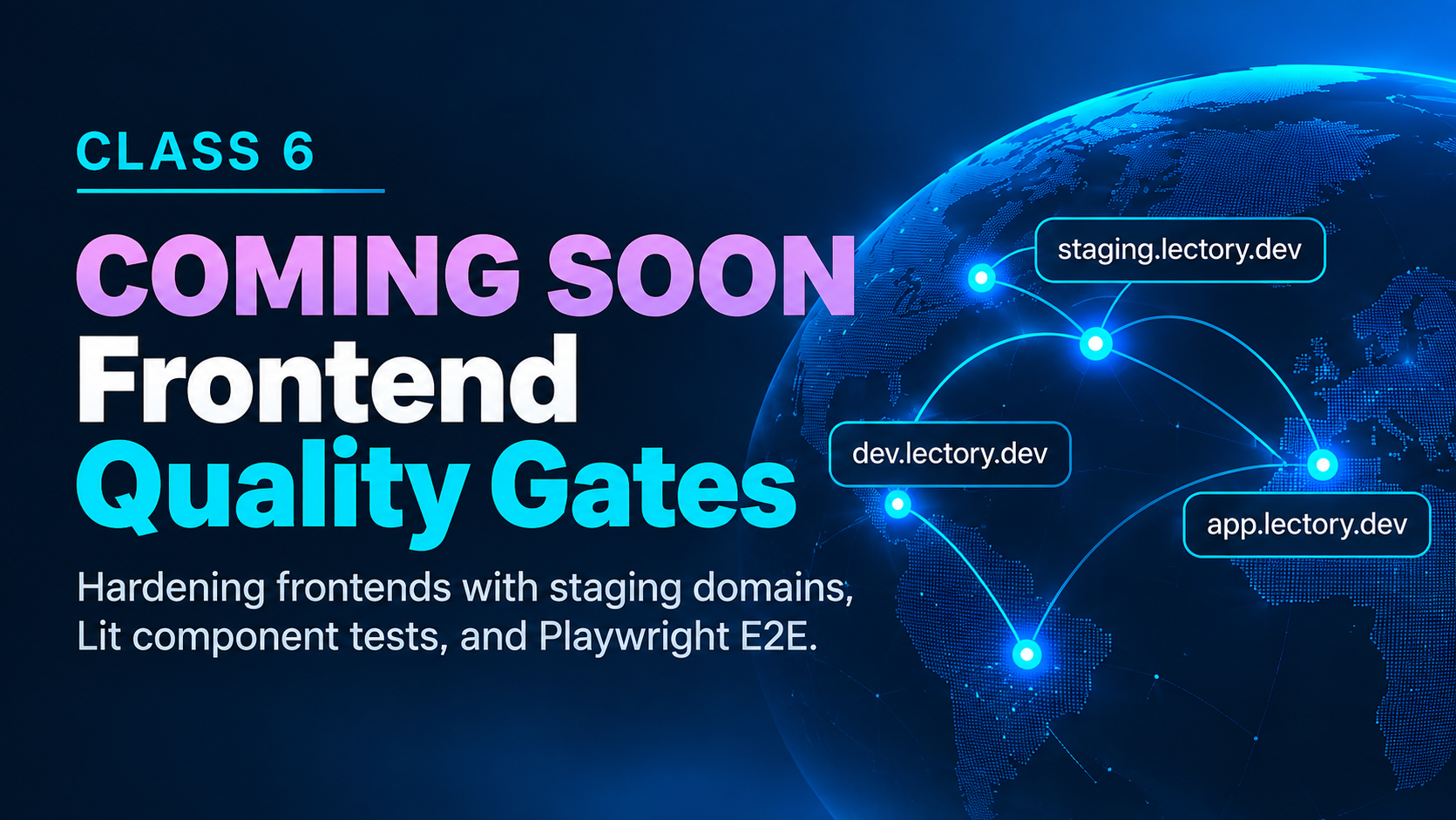
Frontend Quality Gates: Lit Tests & Playwright
Hardening edge frontends and progressive web apps with Cloudflare staging subdomains, Vitest Lit Shadow DOM component tests, Playwright end-to-end browser suites, and gated CI/CD release pipelines.
- Cloudflare Staging Subdomains with Isolated Worker Secrets
- Lit Component Unit Tests with Vitest & @open-wc/testing
- Playwright E2E: Service Worker Caching & Offline PWA
- Gated deploy-web.yml Pipeline with Staging Promotion